- Bareo
- March 2026
A home should begin with lifestyle, not style
In recent years, Thailand has become a global destination not only for travel, but also for long-term living, investment, and retirement. For internationally minded Thai homeowners and foreign buyers alike, owning a penthouse in Bangkok, Phuket, or other major cities represents more than real estate—it reflects a lifestyle defined by privacy, exclusivity, and panoramic living.
This is where Penthouse Interior Design plays a critical role. Unlike standard condominium units, penthouses demand a more strategic and sophisticated design approach, one that integrates architecture, lifestyle, and identity into a seamless spatial experience.
A penthouse is fundamentally different in scale, proportion, and potential. Higher ceilings, expansive terraces, and uninterrupted skyline views create both opportunities and challenges.
In the context of Interior Design Thailand, these spaces must respond to Tropical climate conditions (heat, sunlight, humidity), Structural limitations of high-rise buildings and Lifestyle expectations of global homeowners.
Design Principles for Penthouse Interiors
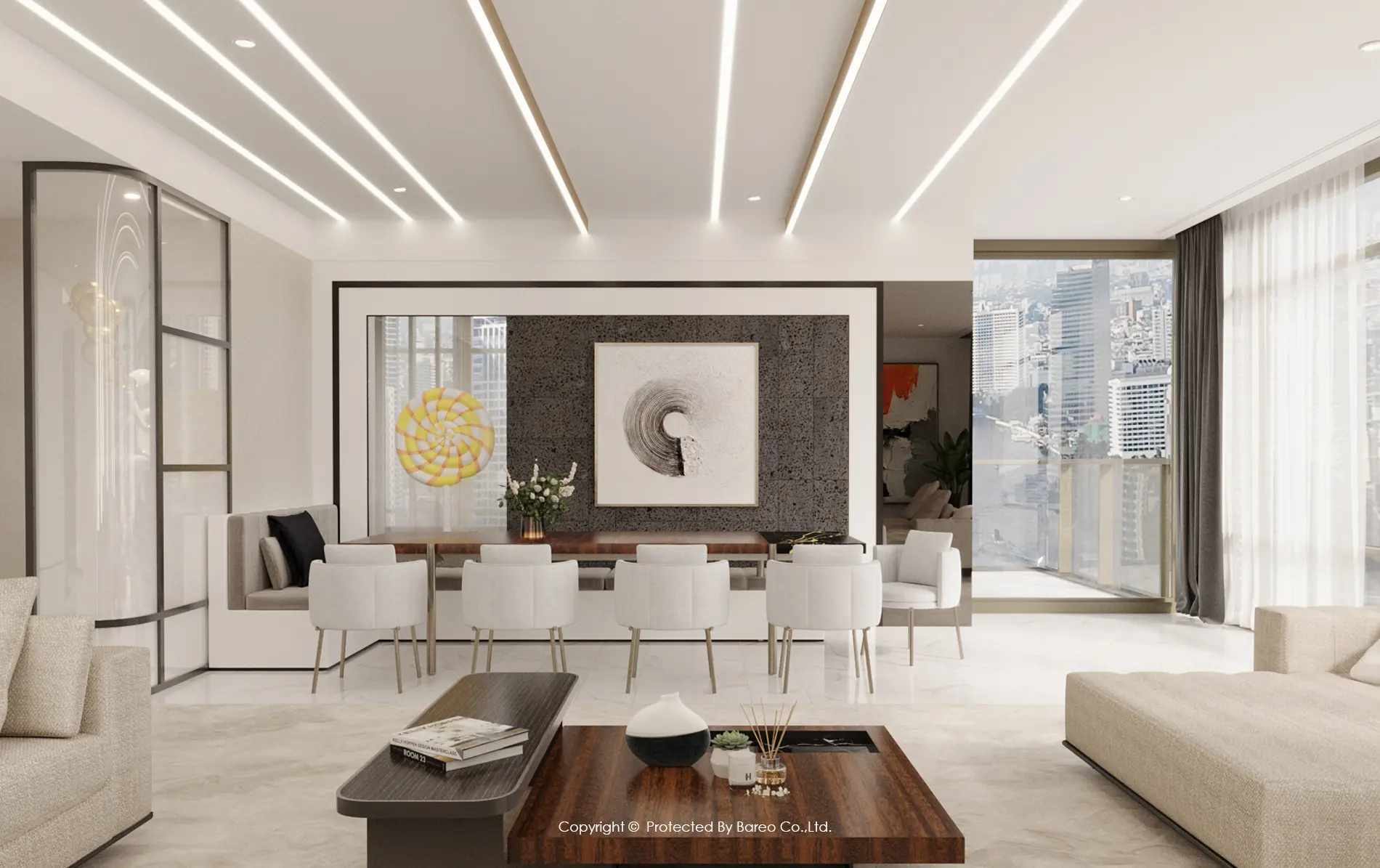
1. Spatial Zoning with Purpose
Penthouses are not simply larger units, they require thoughtful zoning. Public, private, and service areas must be clearly defined while maintaining visual continuity.
Double-volume living areas, private lounges, and master suites are often designed as distinct yet interconnected environments.
2. Maximizing Natural Light and Views
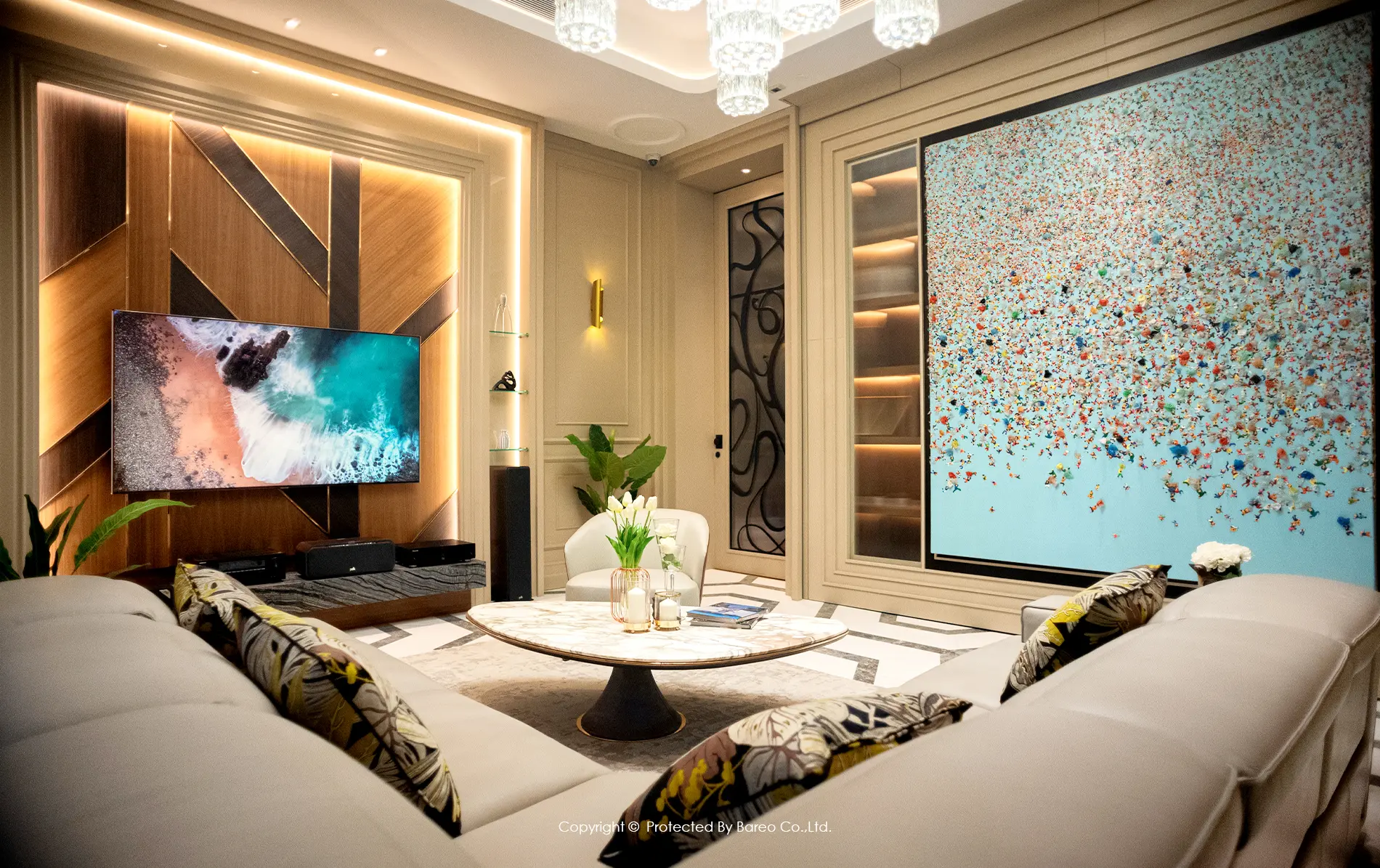
The defining feature of any penthouse is its view. Floor-to-ceiling glazing should be complemented by interior layouts that frame the skyline rather than obstruct it.
Material selection also plays a role. Reflective surfaces, light-toned finishes, and strategic lighting design enhance spatial perception throughout the day.
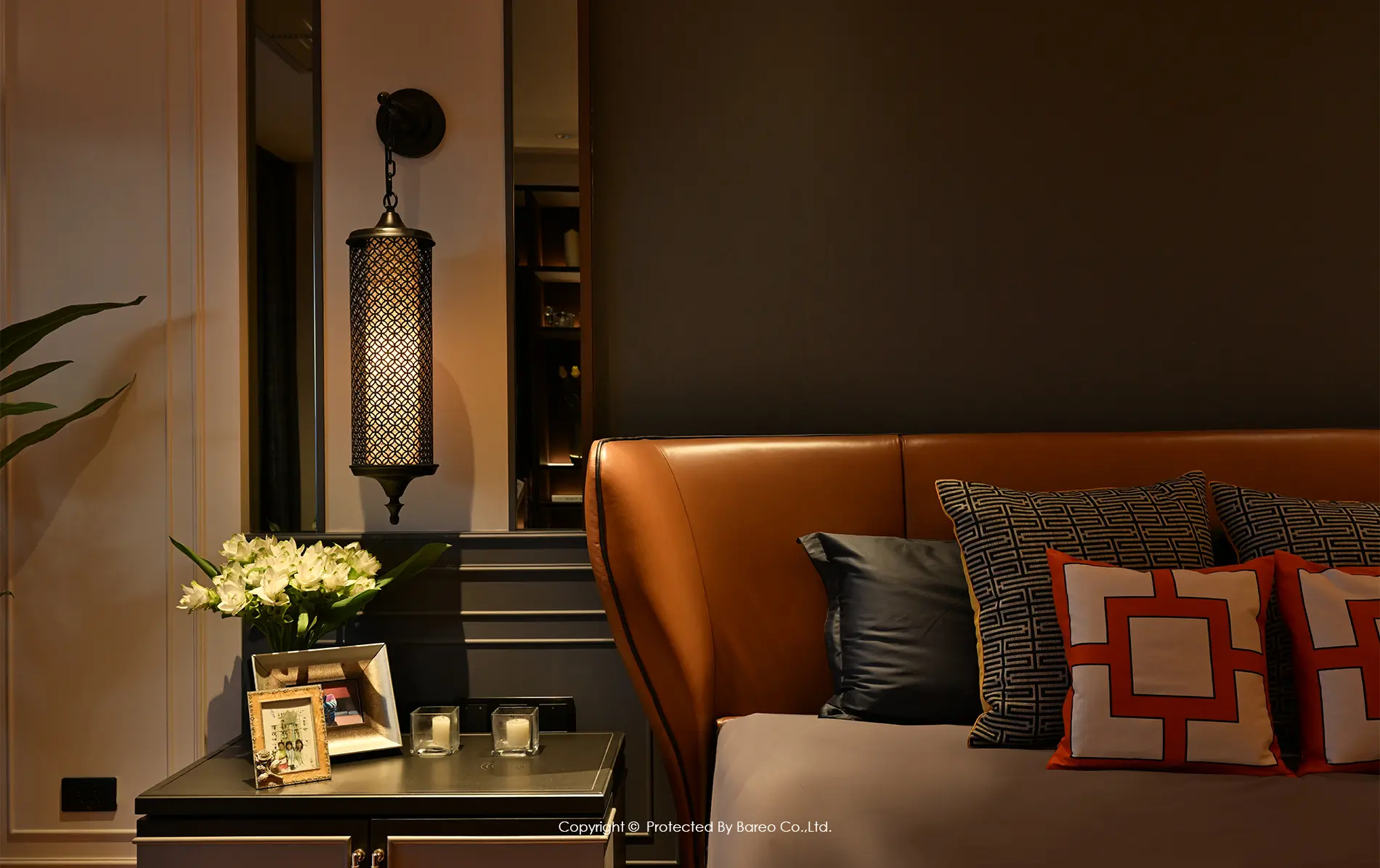
3. Materiality and Craftsmanship
True Luxury Interior Design goes beyond aesthetics. It is defined by material integrity and execution. In Thailand, this includes:
- E0-grade wood boards for healthier indoor environments
- Water-based finishes to reduce VOC emissions
- Climate-appropriate materials resistant to humidity
These considerations are especially important in enclosed high-rise environments where air quality directly impacts well-being.
4. Integration of Systems and Technology
Modern penthouses often incorporate smart home systems, concealed air-conditioning, and integrated lighting controls.
The challenge lies in making technology “invisible” fully functional, yet seamlessly embedded within the design.
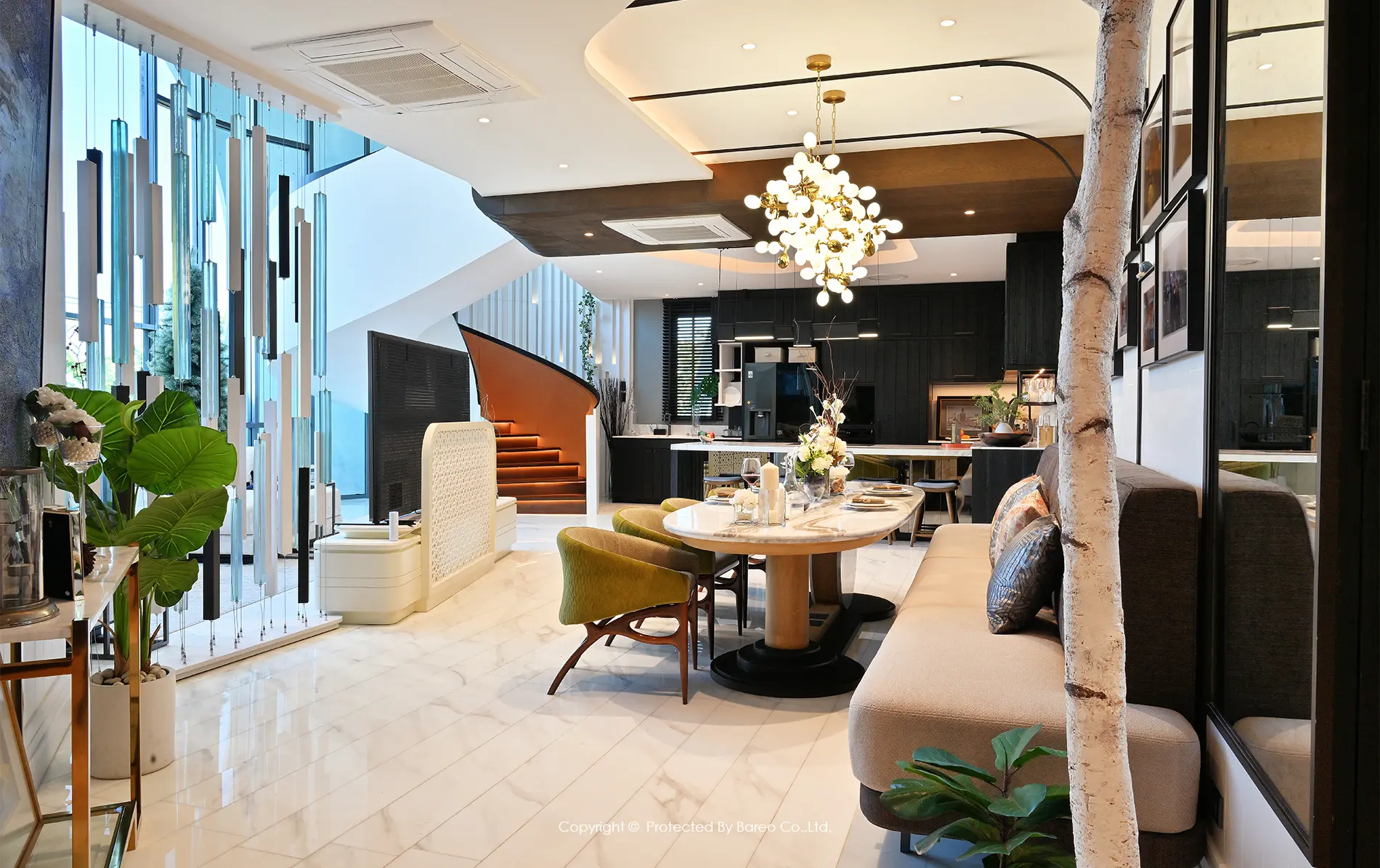
One of the most common issues in the Thai market is fragmentation—where design, production, and installation are handled by separate parties. This often leads to inconsistencies between concept and execution.
A professional Penthouse Interior Design project should follow a structured process:
- Concept Design & Space Planning
- 3D Visualization (CGIs)
- Detailed Construction Drawings
- Production & Installation
Without detailed drawings, even the most refined design concepts risk being misinterpreted during construction.
At Bareo, penthouse projects are approached as a complete system, not just a design service. With over three decades of experience in Luxury Interior Design and turnkey execution, Bareo integrates design, production, and installation under one roof. This allows for:
- Precision in every detail
- Consistency from concept to completion
- Greater control over materials and craftsmanship
Bareo’s philosophy, “Not Only Luxury, It’s a Heritage,” reflects a commitment to creating interiors that are not only visually impressive, but also enduring in quality and meaning.
Whether you are a Thai homeowner returning from abroad or an international buyer investing in Thailand, a penthouse represents a unique opportunity to create a truly personal environment above the city. Through a thoughtful approach to Interior Design Thailand, a penthouse can become more than a residence, it becomes a statement of identity, a private sanctuary, and a long-term investment in lifestyle.
Explore Our Work : Discover our portfolio of luxury residential interior design Bangkok and interior design and decoration projects across Thailand.
Contact Us : Let us design a home that reflects your lifestyle and stands the test of time.

Call :
(+66) 61-846-6633

E-mail :
[email protected]

LINE Official :
@bareo

Facebook Page :
Design by Bareo

WeChat :
bareoth
FAQ : Luxury Interior Design in Thailand
Q1: Why is built-in furniture more common in luxury homes in Thailand?
Built-in furniture is widely preferred in Thailand due to its ability to maximize space efficiency, especially in condominiums and penthouses. In luxury residences, it also ensures a seamless aesthetic, precise craftsmanship, and long-term durability. Unlike loose furniture, built-ins are tailored to the architecture, creating a more refined and cohesive living environment.
Q2: How long does a luxury interior design project take in Thailand?
The timeline varies depending on project size and complexity:
- Condominium / Penthouse: 3–6 months
- Luxury Houses / Villas: 6–12 months
This includes design development, production, and installation. High-end projects often require custom fabrication, which adds to the timeline but significantly enhances quality.
Q3: Can foreign homeowners manage an interior design project remotely?
Yes. Many luxury interior design firms in Thailand offer full turnkey services, including remote project management. This typically involves:
- Online design presentations
- Progress updates with photos/videos
- Procurement and installation coordination
This is especially beneficial for expatriates or overseas property owners.
Q4: What should I prepare before starting a luxury interior project?
To ensure a smooth process, clients should prepare:
- A clear budget range
- Lifestyle requirements (e.g., entertaining, family living, work-from-home)
- Reference images or preferred styles
- Property details (floor plans, developer restrictions)
Q5: Is wellness-focused interior design popular in Thailand?
Yes, increasingly so. Especially at BAREO we concern and focused on client’s wellness and health together with aesthetic. Many luxury homes now incorporate:
- Natural ventilation and lighting
- Low-toxicity materials e.g. E0 Wood Board, Water-based paint
- Acoustic comfort
- Spa-like bathrooms and relaxation areas
This aligns with global trends in wellness living and sustainable design.
Written by Than.T (Thanchanok Thammakulangkul)
Bachelor of Architecture, First-Class Honors, King Mongkut’s University of Technology Thonburi (2019), Master of Business Design, Domus Academy, Milan (2020), Grade 106/110 and One-year program in “Chinese for Foreigners,” Donghua University, Shanghai, awarded “Excellent Student” for both semesters (2024–2025)
Passionate about design and writing since high school, Than.T has authored articles on architecture, art, and interior design for over 15 years.
Writing Advisor:
Mr. Worawut Thammakulangkul
Interior Designer and Founder of Bareo Company Limited
With over 35 years of experience, Mr. Worawut stands as one of Thailand’s foremost figures in luxury interior design. His visionary approach has shaped some of the nation’s most distinguished residences—spaces that embody both timeless beauty and the unique lifestyle of each homeowner. As the creative leader behind Bareo’s award-winning projects, he has guided the design team to achieve numerous international accolades. His expertise, artistry, and unwavering dedication continue to elevate Thailand’s interior design industry onto the global stage.

Share This Post
Tag:
CONTENT RELATED