- Bareo
- April 2026
in High-End Residential Design
In high-end residential design, the dressing room is no longer treated as a secondary or purely functional space. It has evolved into a private sanctuary where aesthetics, organization, and personal identity converge. Much like a curated gallery, a well-designed dressing room reflects the lifestyle, taste, and daily rituals of its owner, while seamlessly integrating with the overall architectural narrative of the home.
The Concept of Spatial Luxury
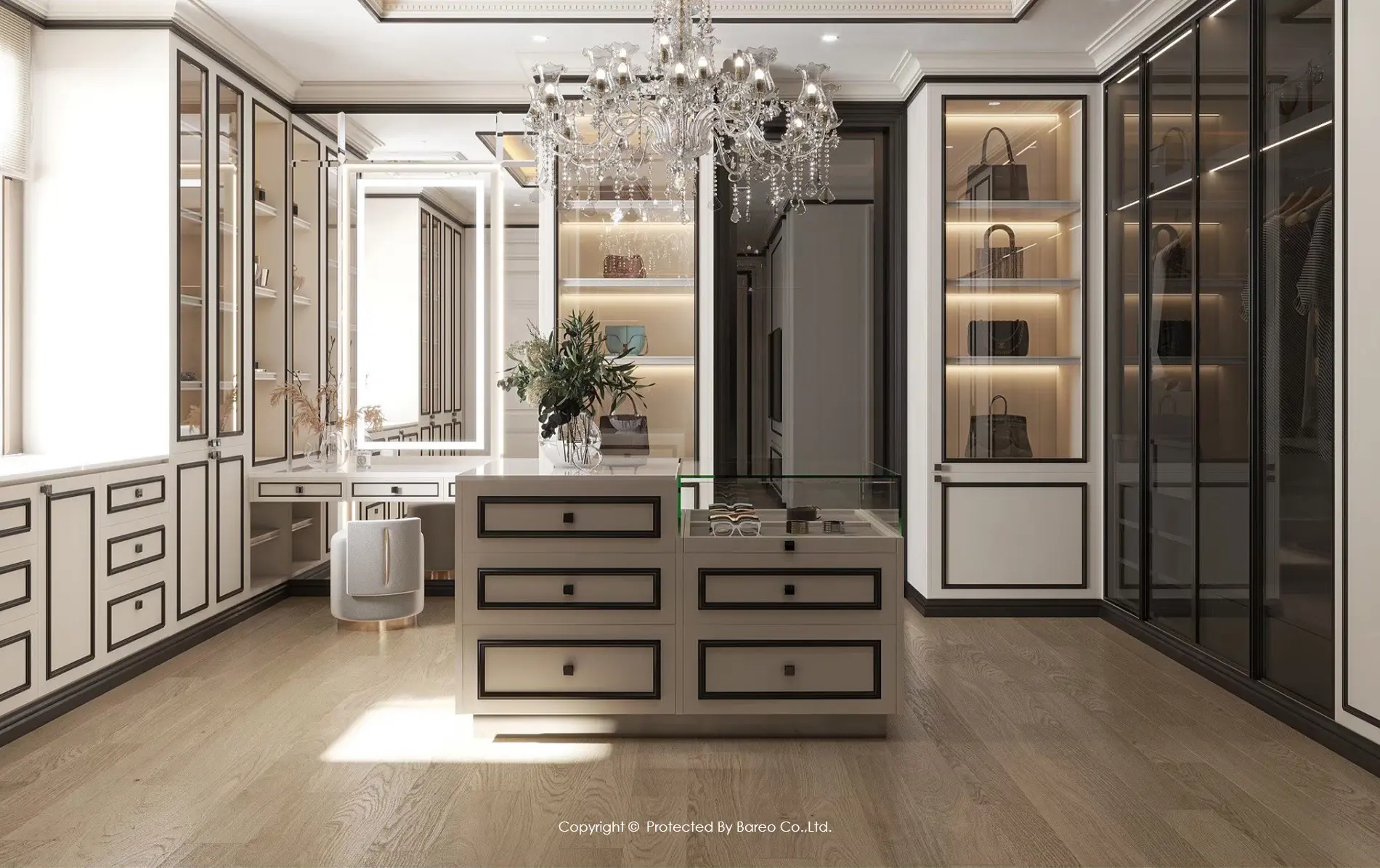
A luxury dressing room begins with deliberate space planning. Rather than compact closets, these spaces are conceived as dedicated environments, often positioned between the bedroom and bathroom to create a seamless daily flow.
One of the most defining typologies is the walk-in closet, which can be configured in multiple ways depending on the scale of the residence:
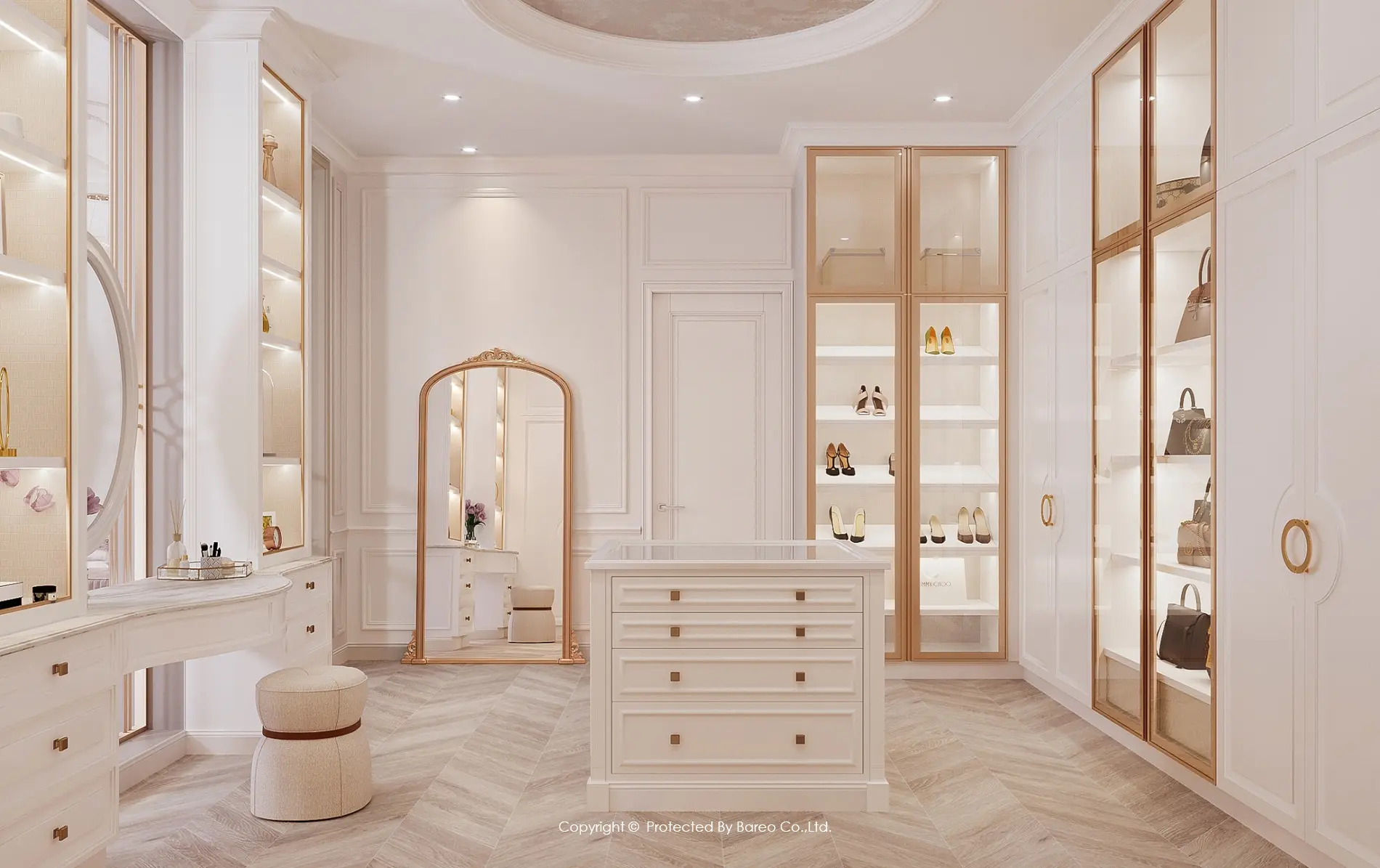
Walk-in closet with island : Typically found in larger homes or penthouses, the central island acts as both a functional and experiential element. It provides additional storage for accessories, watches, or jewelry, while also serving as a visual anchor that organizes the space. The presence of an island reinforces symmetry and creates a boutique-like atmosphere.
Walk-in closet without island : In more compact layouts or where a linear flow is preferred, the absence of an island allows for more open circulation. This configuration emphasizes efficiency and accessibility, often utilizing wall-to-wall cabinetry to maximize storage while maintaining a clean, uncluttered spatial experience.
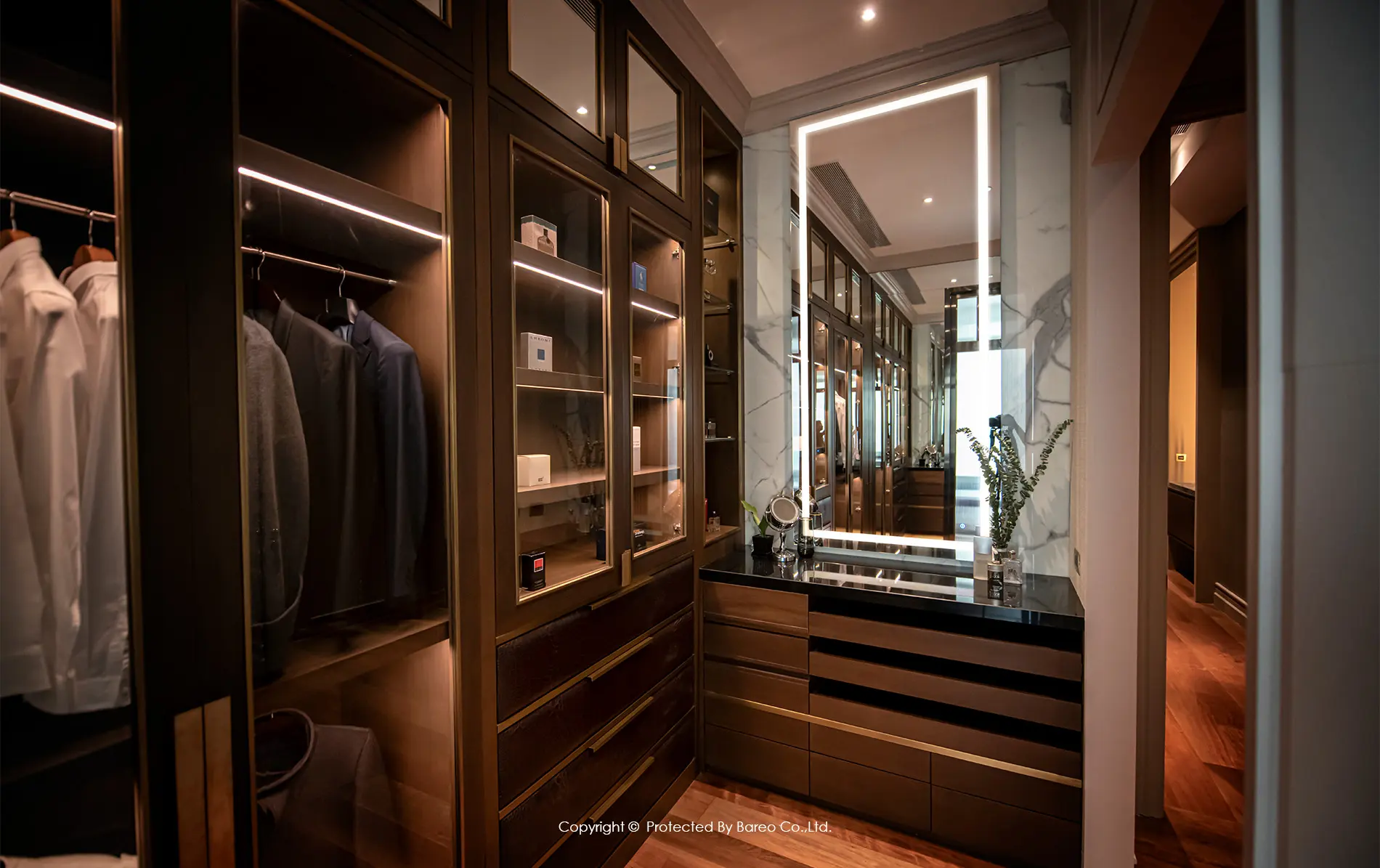
His’s Walk-in-Closet
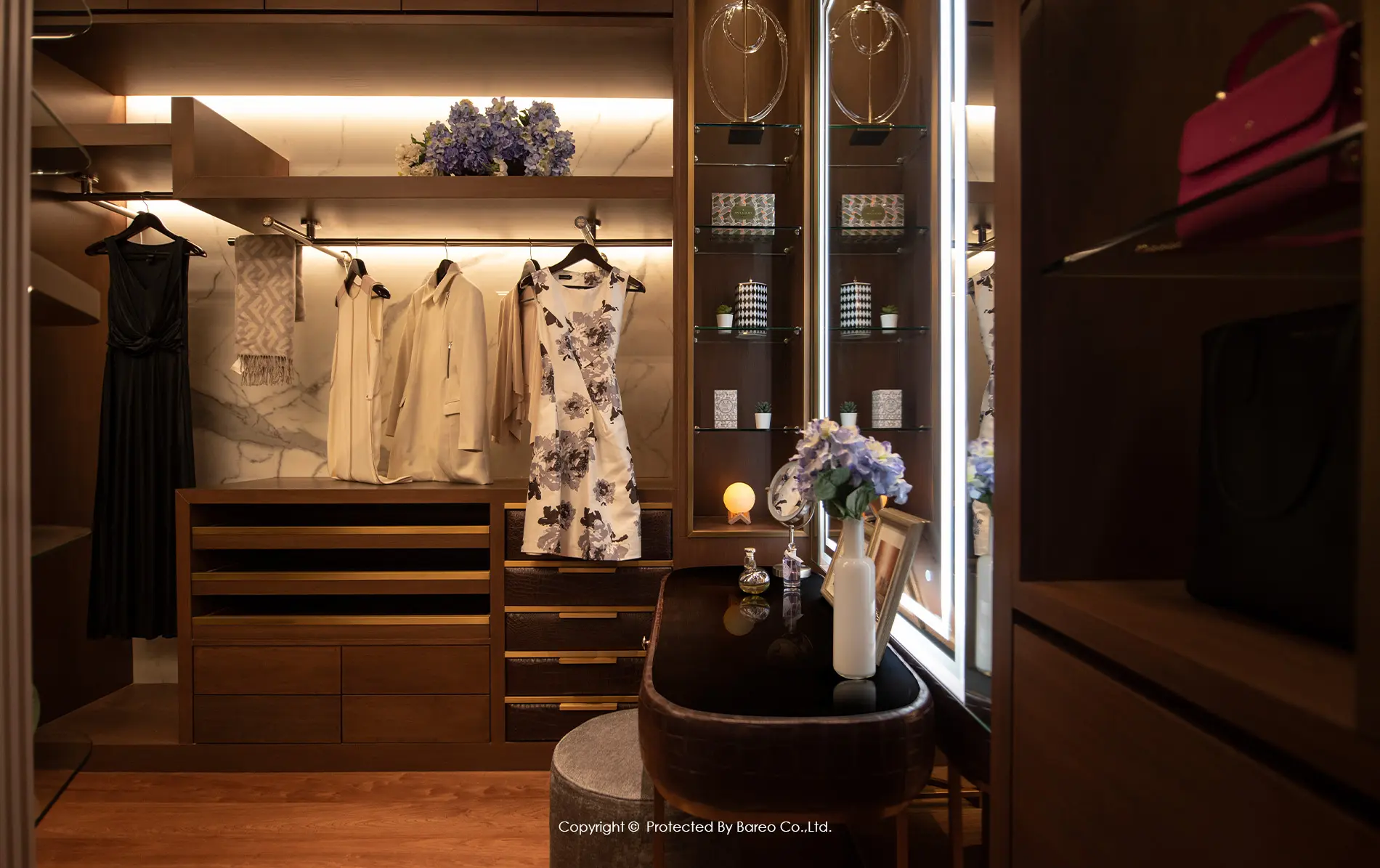
Her’s Walk-in-Closet
In high-end residences, it is also common to design His Walk-in Closet and Her Walk-in Closet as separate yet connected spaces. This approach allows each individual to have a tailored environment aligned with their personal wardrobe, habits, and aesthetic preferences. While one may prioritize structured storage for formalwear, the other may require more flexible compartments for accessories or seasonal rotation. The separation enhances both functionality and privacy, while maintaining a cohesive design language across the two spaces.
Materiality and Craftsmanship
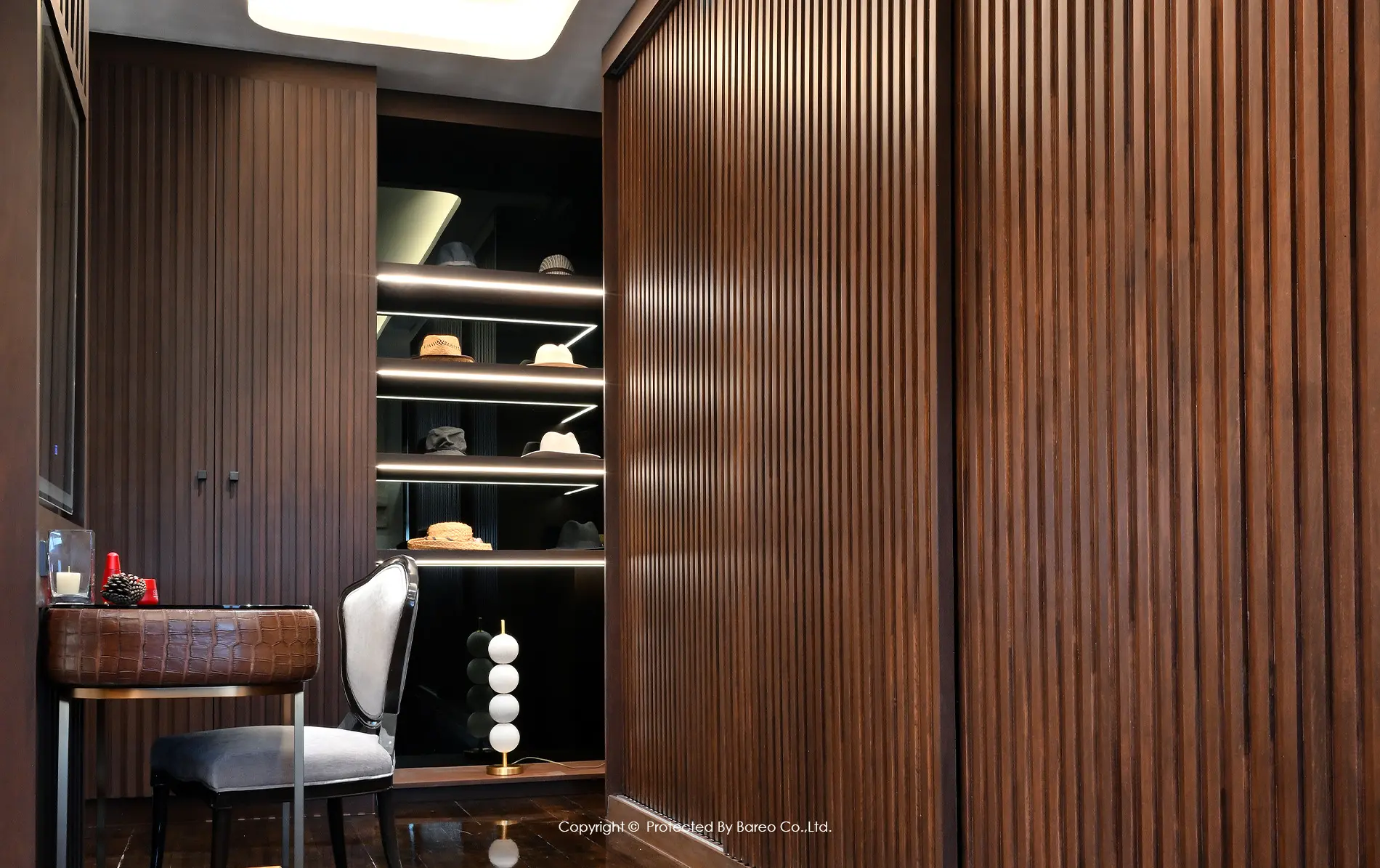
Material selection plays a defining role in elevating a dressing room from functional to exceptional. High-end interiors favor materials that convey tactile richness and long-term durability.
Natural wood veneers, leather-wrapped panels, smoked or tinted glass, and refined metal accents are commonly used to create depth and layering. In climates such as Thailand, where humidity is a critical factor, materials must be carefully engineered to ensure stability over time.
Custom-built cabinetry remains the core of a luxury dressing room. Every detail is intentional, from soft-close mechanisms to compartmentalized storage lined with premium materials. This precision ensures that the space is both visually refined and ergonomically efficient.
Wardrobe Front Systems: Expression Through Design
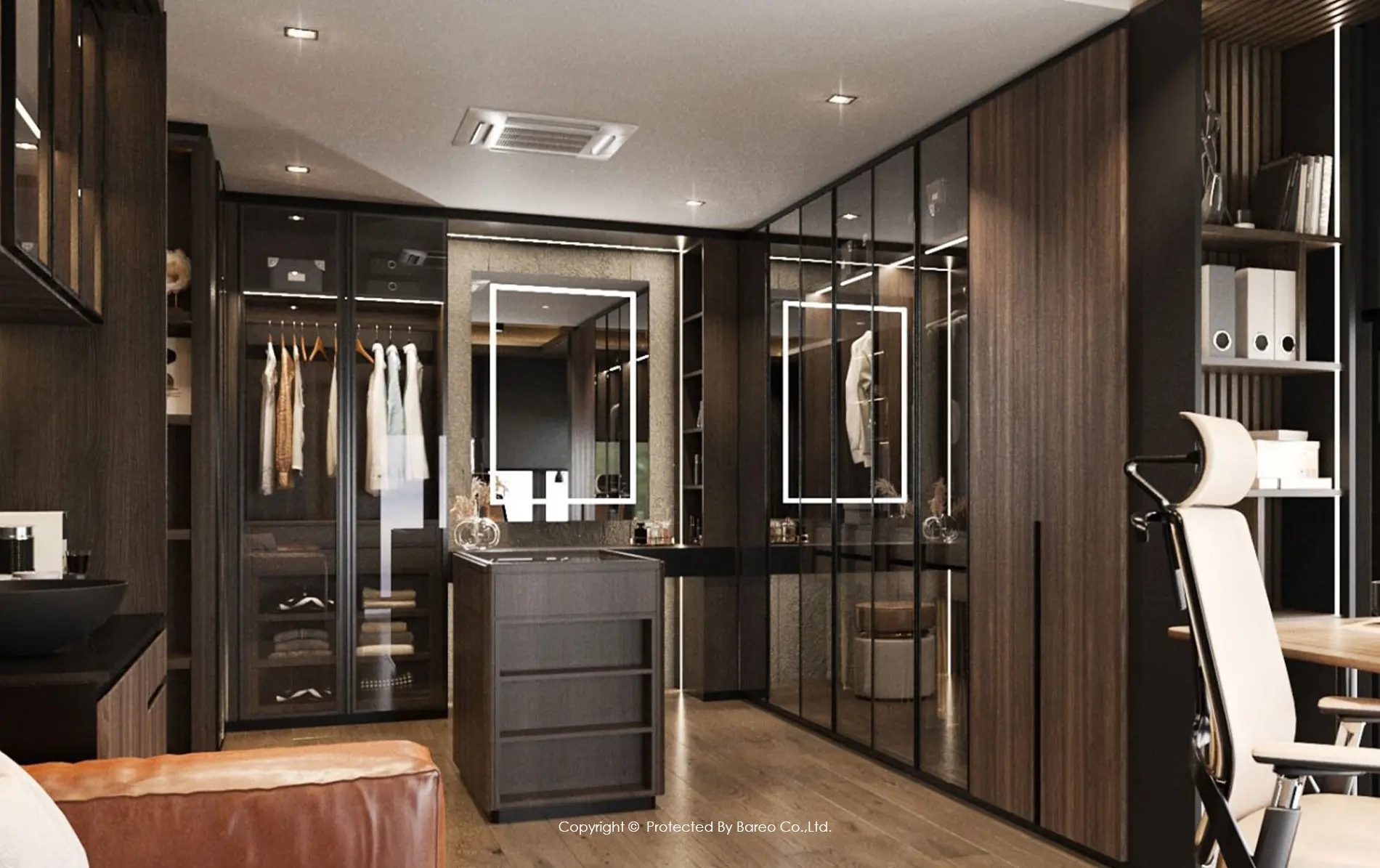
The design of wardrobe fronts significantly influences both the aesthetic and functional character of the dressing room. In high-end residential design, three primary approaches are commonly used:
Solid fronts
Opaque panels, often finished in wood veneer, lacquer, or leather, create a clean and monolithic appearance. This approach conceals internal storage, resulting in a calm and highly controlled visual environment. It is particularly suitable for classic or minimalist interiors where visual simplicity is prioritized.
Glass fronts
Transparent or smoked glass doors introduce a sense of lightness and allow curated items to be partially displayed. This approach transforms the wardrobe into a showcase, adding depth and visual interest while maintaining organization. Internal lighting becomes essential in this configuration to enhance visibility and highlight textures.
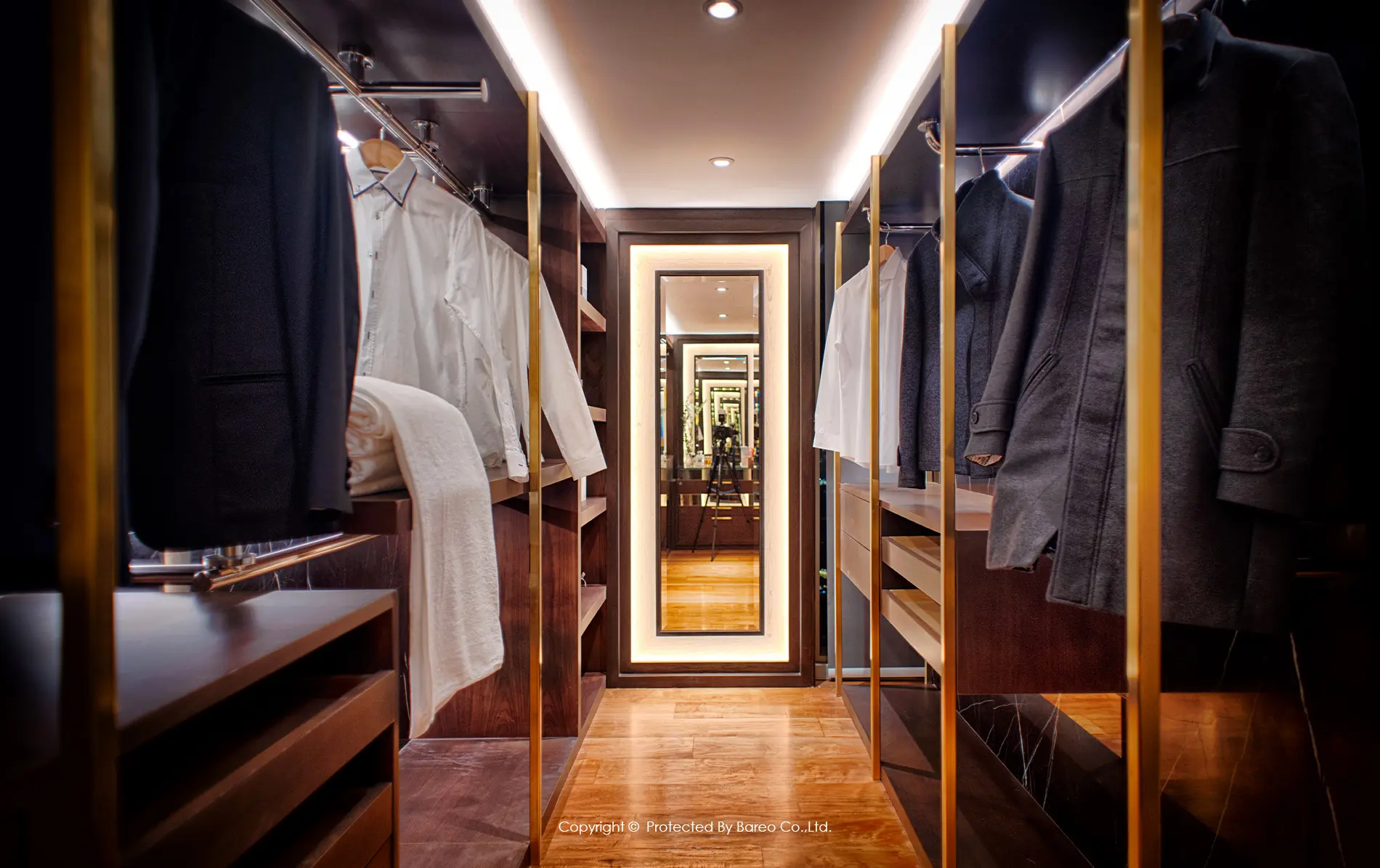
Open or frameless systems (no fronts)
In more contemporary or lifestyle-driven designs, wardrobes may be left open without doors. This creates immediate accessibility and a boutique-like experience, where clothing and accessories become part of the interior composition. However, this approach requires a high level of discipline in organization and is often paired with carefully controlled lighting and layout planning.
Each system can also be combined within a single dressing room to balance openness and concealment, depending on the function of each zone.
Organization as a Lifestyle System
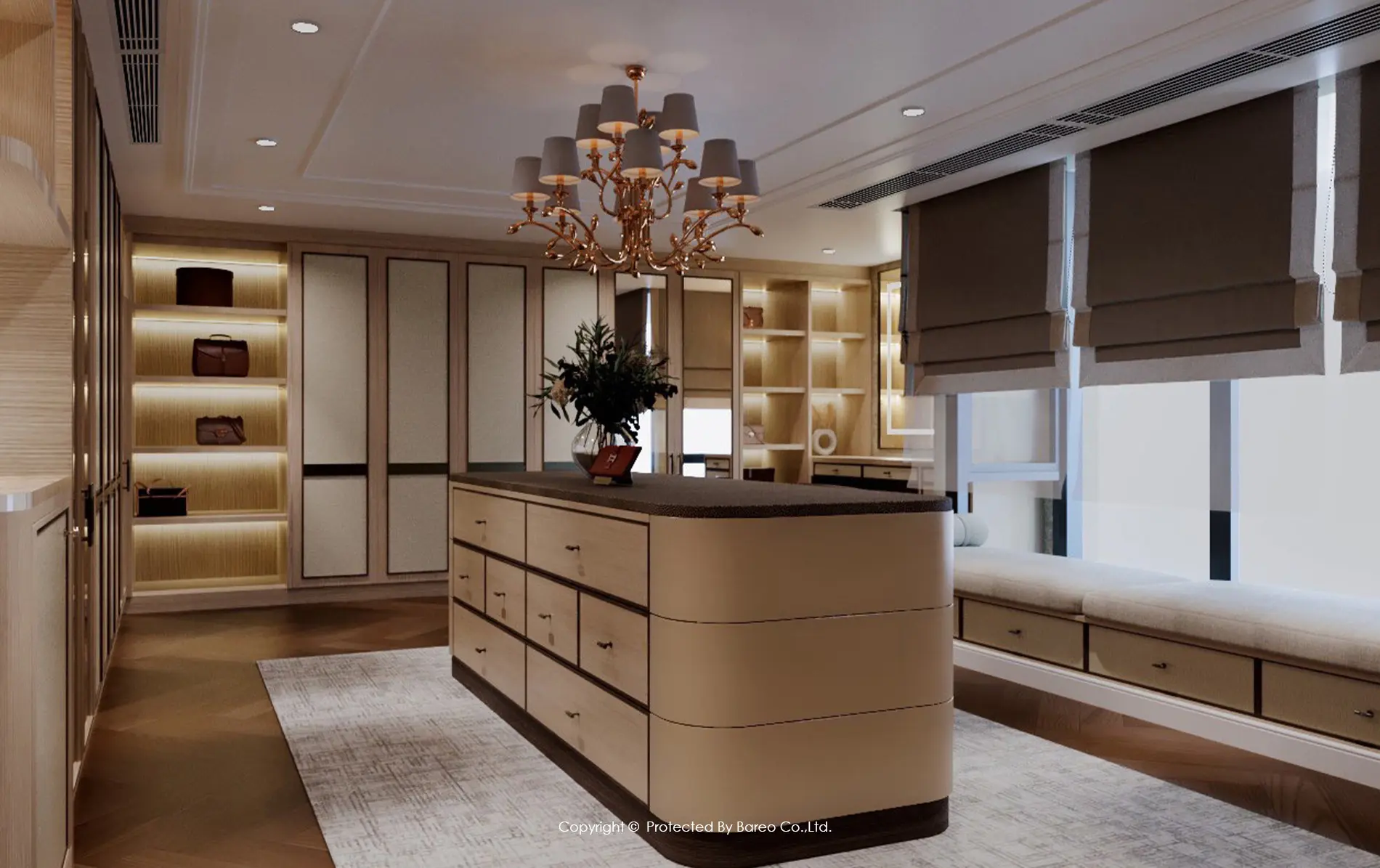
A luxury dressing room is ultimately a system designed around the owner’s lifestyle.
Zoning is essential. Garments are categorized by type, usage, or season. Accessories are displayed in a way that is both practical and visually refined. Central islands, where present, function as multi-purpose elements for storage, display, and daily use.
Seating elements such as benches or ottomans further reinforce the dressing room as a personal retreat rather than a purely functional space.
At Bareo, dressing rooms are approached as an integral component of luxury living. Each space is developed through a comprehensive process that begins with understanding the client’s lifestyle and extends through detailed design and precision-built execution.
With a focus on spatial clarity, material integrity, and long-term usability, every dressing room is crafted to balance elegance with performance.
Because true luxury is not defined by how much space you have, but by how well that space is designed to support the way you live.
At Bareo, this belief is reflected in a simple idea : Not Only Luxury, It’s the Heritage
Explore Our Work : Discover our portfolio of luxury residential interior design Bangkok and interior design and decoration projects across Thailand.
Contact Bareo today to begin designing a living space that is refined, comfortable, and healthy in every breath.
Booking a private consultation with us :

Call / WhatsApp :
(+66) 61-846-6633

E-mail :
[email protected]

LINE Official :
@bareo

Facebook Page :
Design by Bareo

WeChat :
bareoth
FAQ : Dressing Rooms & Walk-in Closets in Luxury Homes (Thailand)
What is a walk-in-closet and why is it important in luxury interior design?
A walk-in-closet is a dedicated dressing space designed for both storage and daily use. In luxury interior design, it goes beyond functionality by creating a private, well-organized environment that enhances lifestyle quality. In high-end homes, it is often integrated into the master suite to support seamless daily routines.
Should a walk-in-closet have an island in the center?
It depends on the available space and lifestyle needs.
In penthouse interior design or large residences, a central island adds both storage and visual balance, often used for accessories or display.
In more compact layouts, a walk-in-closet without an island allows for better circulation and maximizes usable storage along the walls.
What is the difference between His and Her walk-in-closets?
His walk-in-closet and Her walk-in-closet are designed as separate but connected spaces to accommodate different storage needs and personal preferences.
In luxury interior design, this separation improves organization, privacy, and efficiency, especially in high-end residences in interior design Thailand projects.
Written by Than.T (Thanchanok Thammakulangkul)
Bachelor of Architecture, First-Class Honors, King Mongkut’s University of Technology Thonburi (2019), Master of Business Design, Domus Academy, Milan (2020), Grade 106/110 and One-year program in “Chinese for Foreigners,” Donghua University, Shanghai, awarded “Excellent Student” for both semesters (2024–2025)
Passionate about design and writing since high school, Than.T has authored articles on architecture, art, and interior design for over 15 years.
Writing Advisor:
Mr. Worawut Thammakulangkul
Interior Designer and Founder of Bareo Company Limited
With over 35 years of experience, Mr. Worawut stands as one of Thailand’s foremost figures in luxury interior design. His visionary approach has shaped some of the nation’s most distinguished residences—spaces that embody both timeless beauty and the unique lifestyle of each homeowner. As the creative leader behind Bareo’s award-winning projects, he has guided the design team to achieve numerous international accolades. His expertise, artistry, and unwavering dedication continue to elevate Thailand’s interior design industry onto the global stage.

Share This Post
Tag:
CONTENT RELATED